If you work with fastening systems, you already know that even small variations can create bigger problems during assembly. Chamfered fasteners depend on accuracy to fit correctly, install smoothly, and hold performance over time. This is why tolerances and edge quality matter so much during production.
A chamfer is a beveled edge added to the end of a fastener. You will often see it on studs, bolts, and threaded parts. The chamfer helps guide the fastener into place, improves thread alignment, and reduces resistance during installation. Without a properly formed chamfer, assembly becomes slower and more difficult.
In demanding systems, including equipment connected to marine components, small inconsistencies can lead to larger performance issues later.
What A Chamfer Does And Why It Matters
You can think of a chamfer as the guide that helps a fastener begin threading correctly. Instead of forcing threads into position, the angled edge improves insertion and supports smoother engagement.
Chamfer geometry affects how easily a fastener enters an assembly. If the angle is inconsistent or poorly formed, thread engagement can suffer. This may lead to cross threading, uneven load distribution, or premature wear.
This matters across many industries represented in the company’s markets served, including manufacturing environments where repeatability and installation speed affect overall productivity.
Proper chamfered fastener manufacturing supports better thread alignment and helps reduce installation delays before parts ever enter service.
Why Tight Tolerances Matter In Chamfered Fasteners
Tolerances define the amount of acceptable variation allowed during production. In chamfered fasteners, tolerances affect size, angle, edge shape, and consistency across every part.
Even small differences can create problems. A fastener with inconsistent chamfer geometry may install differently than the next one in the batch. Over time, this affects performance and reliability.
Strong tolerance control in manufacturing helps maintain machining repeatability and improves installation consistency. Better quality systems support this process by helping manufacturers maintain repeatable output across production runs.
In systems involving marine components or harsh operating environments, dimensional accuracy becomes even more important because wear and vibration already place added stress on assemblies.
How Edge Quality Supports Better Thread Engagement
Edge quality affects how well a fastener performs during installation. Clean edges reduce resistance and improve insertion accuracy. Rough edges or burrs can interfere with thread alignment and increase the chance of damage.
Surface finish in chamfering affects how smoothly parts fit together. Burr reduction techniques improve assembly flow and help reduce delays during installation.
A properly refined edge is not cosmetic. It directly affects function. Better edge finishing precision supports smoother operation and reduces premature wear across fastening systems.
Recent manufacturing data found that dimensional variation and poor surface quality contribute to nearly 20 percent of assembly related failures in industrial production environments.
How Precision Finishing Equipment Improves Consistency
The final finishing stage has a major impact on part quality. Equipment designed for chamfering stamping operations helps maintain consistency across thousands of fasteners.
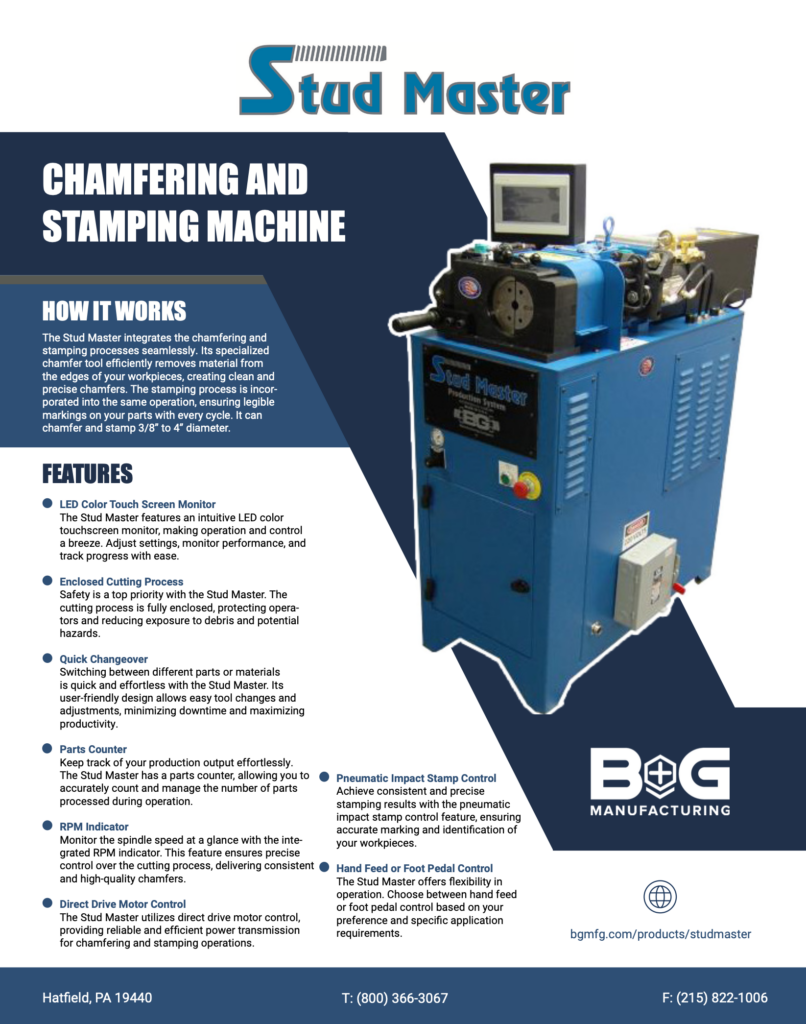
Processes involving a Stud Master chamfering and stamping machine improve CNC chamfering accuracy and help maintain consistent geometry across batches. Better cutting tool alignment also improves chamfering machine precision during longer runs.
Understanding how to use the Stud Master effectively also helps support stud chamfering optimization and more consistent stamping results.
Why Inspection And Quality Control Matter
Precision finishing only works when supported by strong inspection systems. Dimensional checks, in process inspections, and documented workflows help maintain consistency from one production batch to another.
Strong quality assurance in precision manufacturing supports better repeatability and improves confidence during assembly.
Inspection also supports traceability. Clear records tied to traceability in supply chain management for critical components help manufacturers identify production history and maintain accountability.
Industry reporting from 2024 found that companies using structured quality systems improved production consistency by almost 30 percent through repeatable inspection processes.
Why Reliable Suppliers Matter In Fastener Performance
Your fastening systems are only as reliable as the parts used to build them. Consistency depends on process control, machining accuracy, and finishing quality.
Working with a reliable fastener partner helps support consistent edge quality, tighter process control, and repeatable results.
Experience also matters. Companies with proven capabilities and recognized accreditations are better equipped to support demanding assemblies where installation reliability matters.
At B&G Manufacturing, precision finishing plays an important role in supporting stronger fastening performance across industries and applications.
Why Chamfer Precision Improves Long Term Performance
Chamfer precision affects far more than appearance. Tight tolerances and strong edge quality improve thread engagement, reduce cross threading, and help maintain smoother installation.
Better chamfering and stamping machine optimization support machining repeatability, while clean edges reduce wear and improve reliability over time. Whether your systems involve industrial equipment, OEM assemblies, or marine components, stronger chamfer quality helps reduce installation issues and improve manufacturing consistency.
Reliable performance begins with precision at the final stage, because even small details in edge formation can shape long term results.